
The Betterment Breach Should Have Ended the Debate. It Didn’t.
By Kevin Surace | 4 minute read
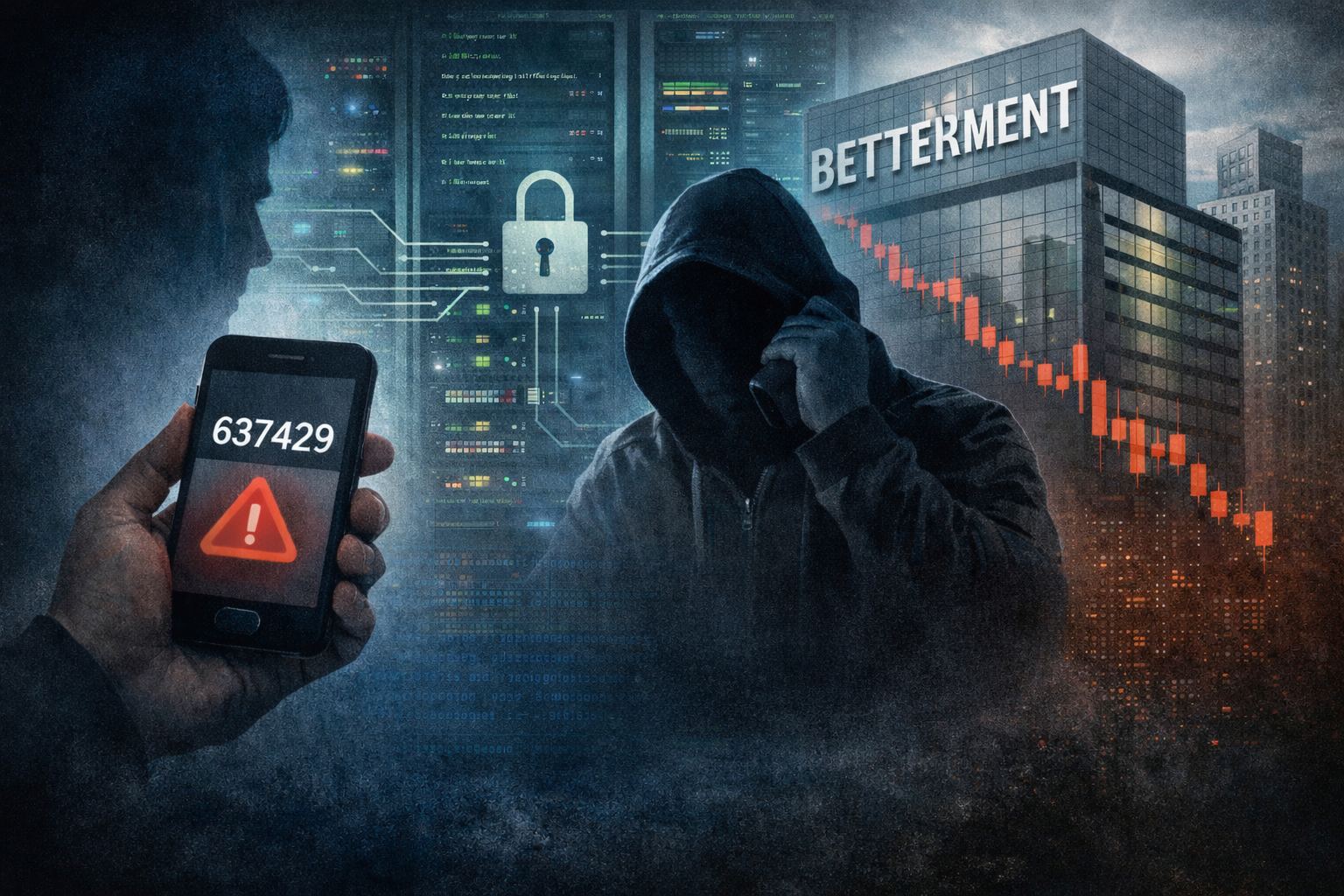
The Betterment breach should not have surprised anyone paying attention, and it certainly should have ended the long-running argument about whether modern MFA is sufficient against today’s attacks. Instead, it became just another entry in a growing list of incidents that organizations explain away as bad luck, poor training, or unfortunate human error.
This was not a zero-day exploit.
This was not advanced malware.
This was not a nation-state adversary operating at the edge of technical possibility.
This was a human being persuaded, under pressure, to handover an MFA code to a convincing social engineer, and the system accepted that interaction exactly as it was designed to.
According to public reporting on the incident, attackers gained access through a third-party contractor after successfully social-engineering them during a login flow and obtaining a valid MFA response. In plain terms, nothing was broken, bypassed, or defeated. The attacker did not break in. They logged in.
This is the core problem no one wants to admit.
You can read more about the Betterment data breach here.
The Attack Path We Keep Pretending Is Rare
By now, the sequence is painfully familiar, not because it is sophisticated, but because it is reliable.
- An attacker identifies a contractor or employee with legitimate access.
- They initiate a login using stolen, guessed, or previously leaked credentials.
- The system behaves correctly and triggers MFA.
- The attacker contacts the user while posing as IT, security, or support.
- The user, faced with urgency and authority, provides the MFA code or approves the request.
At that moment, the attacker is authenticated as a valid user, and from the system’s perspective, everything that follows is normal, expected, and trusted.
Every downstream security control is now blind, not because it failed, but because it was never designed to question a successfully authenticated human. Legacy MFA did exactly what it was built to do. It trusted the person on the other end.
Why Cybersecurity Training and Awareness Will Never Solve This
After every incident, the same prescriptions surface:
- We need better training.
- We need more awareness.
- We need to remind people not to share codes.
This response feels responsible, but it is fundamentally disconnected from how these attacks actually work. You cannot train humans to be perfect under pressure, especially when urgency, authority, and fear are deliberately engineered into the interaction. You cannot policy your way out of real-time manipulation. You cannot awareness-campaign your way past attackers who only need one moment of hesitation, one moment of trust, or one moment of fatigue.
As long as authentication depends on a human making the correct judgment call every single time, attackers will continue to succeed, because they only need to be right once.
Why This Attack Doesn’t Exist with Assured Identity
An assured identity platform changes the problem entirely by removing the human from the decision loop:
- There is no MFA code to read aloud.
- There is no push notification to approve reflexively.
- There is no moment where a stressed contractor is asked to decide whether the request is legitimate.
Authentication requires the simultaneous presence of three conditions: a live biometric match, physical proximity to the device being accessed, and a cryptographic request originating from the exact domain bound to that identity.
If any one of those elements is missing, authentication does not partially succeed, degrade gracefully, or fall back to a weaker control. It simply does not happen.
What Happens When an Attacker Tries the Same Playbook
The attacker initiates the login. The system requests authentication. The token device does nothing. Not because of a warning, an alert, or a denial that invites further interaction, but because the requirements for authentication are not met.
The attacker is not physically present.
The attacker does not possess the user’s biometric identity.
A spoofed or pixel-perfect phishing site cannot satisfy domain binding.
There is nothing the contractor can give away, even if they want to. No code, no approval, no workaround. The attack ends quietly, without escalation, because there is nothing left to exploit.
The attack dies at the door. Silently.
Why the Industry Still Refuses to Change
Instead of addressing the foundation, the security industry continues to stack controls on top of a broken model.
Passwords, plus MFA, plus training, plus hope.
At the same time, AI has made social engineering faster, cheaper, and more convincing than ever. Tools that once required specialized skill are now available to teenagers, producing phishing and pretexting campaigns that outperform entire security teams from just a few years ago.
Attackers are not bypassing defenses. They are using them as designed.
The Uncomfortable Reality
Betterment was not unlucky. They were typical. This same pattern has repeated across insurers, airlines, retailers, casinos, and financial institutions, with different logos and identical root causes. If your authentication system allows a human to authenticate an attacker, then compromise is not a hypothetical risk. It is a timing issue.
This breach was preventable, not with more training, and not with another policy document, but with identity systems that are designed to refuse manipulation rather than politely accept it.
The only real question left is how many more times this has to happen before we stop pretending otherwise.
Sign Up
Keep up to date with phishing and ransomware news.
Token will not sell, trade, lease, or rent your personal data to third parties.